Turfgrass managers on many sports facilities and golf courses use recycled water, which contains high salts, chlorine and bicarbonates, as irrigation water. This is often to lower costs and comply with governmental restrictions on water use.
In coastal areas, under unfavourable conditions, seawater can permeate into irrigation water from a high water table.
Recent estimates are that 13% of the golf courses in the United States use recycled water for irrigation (Steinke, K., and E.H. Ervin. 2013. Turfgrass ecology. Pages 347-381. In: B. Horgan, J. Stier and S. Bonos, editors. Turfgrass: Biology, use, and management. Agronomy Monograph 56. ASA, CSSA and SSSA, Madison, Wis.).
The problem is more severe in warmer climates, growing warm season grasses under drought conditions because of using significantly more irrigation water and evapotranspiration rates being much higher.
High salinity in the soil can limit the plant's ability to absorb water due to osmotic pressure. Osmosis is defined as the process by which water molecules pass through a semipermeable membrane from a less concentrated solution into a more concentrated one. Is there more salt outside the root, the plant will lose water into the soil rather than taking it in and water stress will get more severe.

Helpful guidelines on irrigation water quality can be found here:
The Food and Agriculture Organization of the United Nations
-
High salinity negatively affects plant health (salt stress), and ultimately turfgrass performance
-
High salinity can also significantly reduce seed germination levels
-
High salinity negatively affects soil structure
There are proven methods that can help alleviate salt stress:
Regular leaching or flushing
A portion of the salts that accumulate from prior irrigations can be moved (leached) below the rooting depth if more irrigation water infiltrates the soil than is used (https://www.fao.org/3/t0234e/T0234E01.htm#ch1.2.1). This method is also called flushing, but not always practical since it might be difficult enough to get the needed water for regular irrigation, not to speak of additional heavy irrigation to flush the soil profile. Wetting Agents like TourTurf® ELL Respond® Extreme Long Lasting will help to move water through the soil profile.
Use of gypsum or lime
Products containing Calcium like gypsum or lime (Calcium Carbonate) can help to bind and remove Sodium cations. Gypsum in TourTurf® CSG Calcium Sulphate Granules will react quickly with Sodium to form Sodium Sulphate that can be flushed out of the soil profile. Calcium in Gypsum can displace Sodium and form the leachable sulphate salt Na2SO4. If you use gypsum, you don’t expect to change the soil pH.
To supply large amounts of Calcium as a plant nutrient and to raise the pH slightly, use lime.
Acidification
If bicarbonates are high, acidifying forms of fertiliser may be necessary to mitigate the soil binding properties of the bicarbonates. For extremely high bicarbonate levels, acidification of the irrigation water may be warranted.
Benefits of TourTurf® TSF Turf Salt Flush
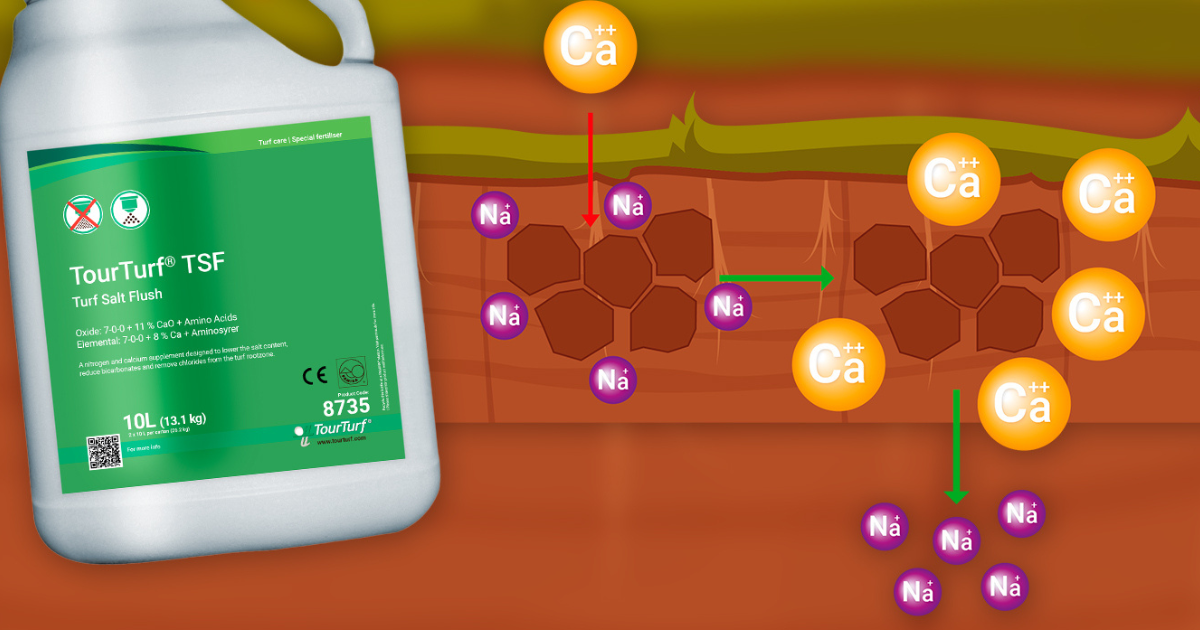
TourTurf® TSF Turf Salt Flush is a calcium and biostimulant supplement designed to lower the salt content, reduce existing bicarbonates and remove chlorides from the rootzone. It is designed to both reduce and balance the salinity of the turf rootzone, meaning plants can easily absorb water with a reduced risk of salt stress.
-
Contains a soluble form of calcium that is available to the plant up to 10 days after application
-
Amino acids and carbohydrates ensure that the turf survives stress periods such as drought and heat much better
Amino acids can be taken up by the plant roots and help to regulate and balance the difference in salt concentration in the rootzone to create an equilibrium
Benefits of calcium for turf
-
Building strong walls which help prevent the plant from being attacked by pathogens
-
Protecting plants against heat stress
-
Holding the cell walls of plants together
-
Activating specific plant enzymes, which send signals to the plant cells that coordinate certain growth activities
Calcium is also key to good soil structure and plays an important part in regulating soil pH (The calcium in TourTurf® TSF Turf Salt Flush will not cause large changes in soil pH).
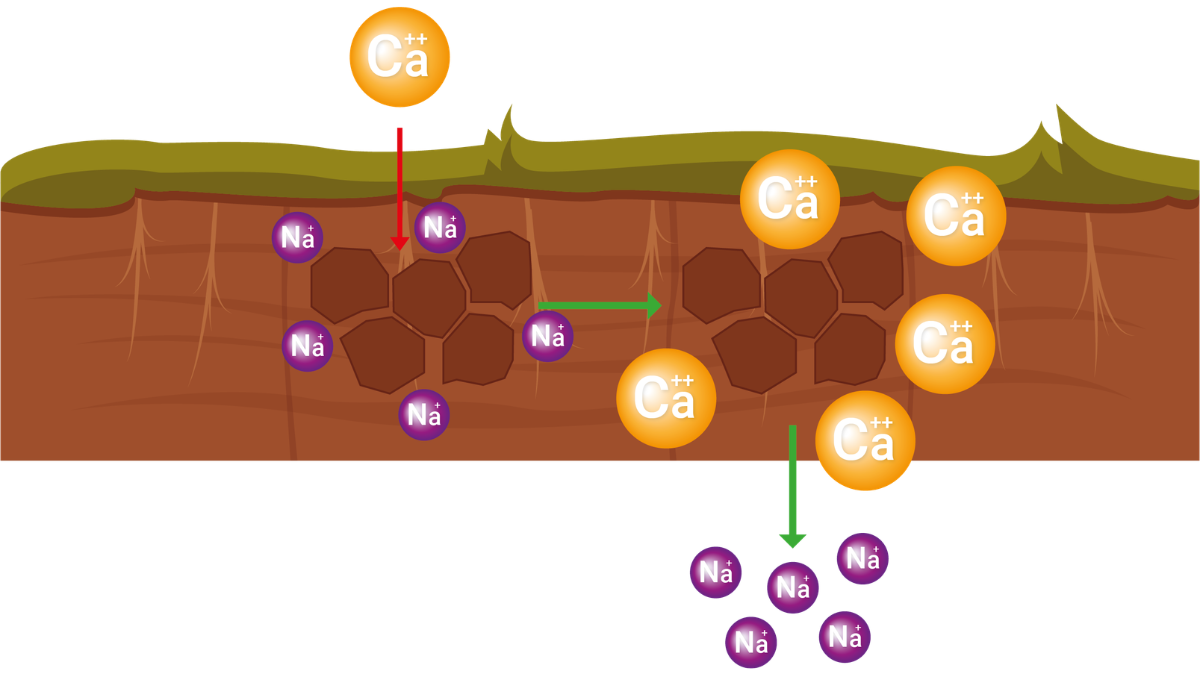
The cation exchange sites of the soil are negatively charged. This attracts positive charged ions to the exchange sites. The use of salt water contains Sodium Ions (Na+) which join to the cation exchange sites, causing salt related issues in the rootzone.
Calcium ions (Ca++) have a stronger electrical charge than sodium and displace the sodium from the cation exchange sites, allowing the sodium to be removed from the rootzone.
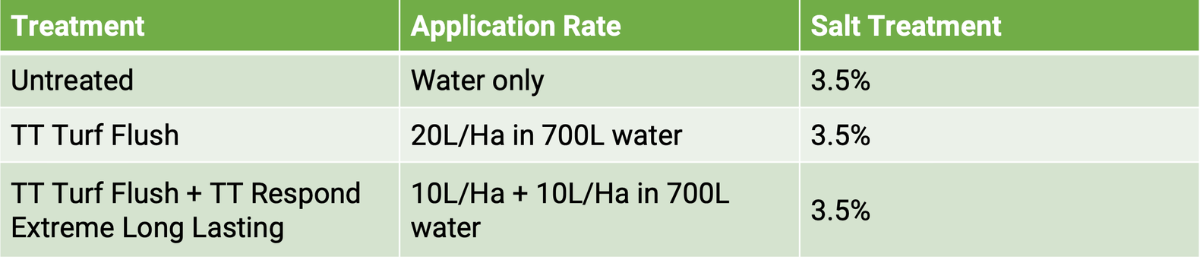
To prove the efficacy of the product, a replicated pot-based trail was set up. A 50:50 mix of top-dressing sand and soil was prepared to form a rootzone. Soils were then drenched with ‘seawater’ (3.5% salt solution). Treatments were then applied to the soil at their recommended application rates.
Treatments
Each treatment was applied as a spray, with around 25 ml of solution required to give full surface coverage. Pots were left to sit overnight after treatment before any leachate was collected.
In-house testing
-
Soils were subjected to ‘irrigation cycles’ after treatment
-
A total of 4 irrigation cycles were completed (with a fifth for external analysis)
-
During each cycle, leachate was collected and filtered
-
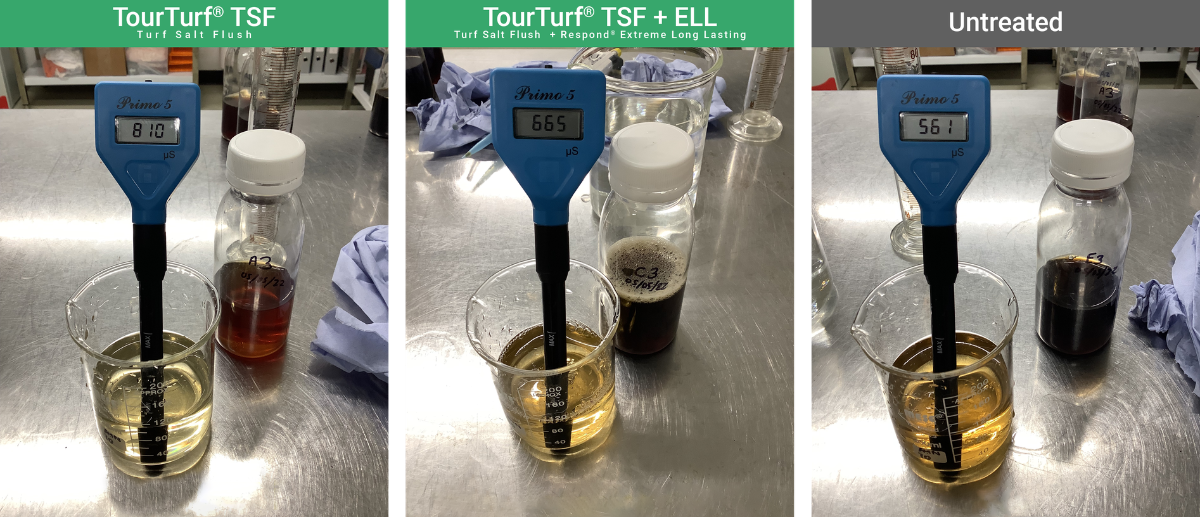
The electrical conductivity (EC) of leachate samples was measured to determine levels of flushed salt
Leachate Sampling
A fixed volume of water was added to each pot to drain the leachate.
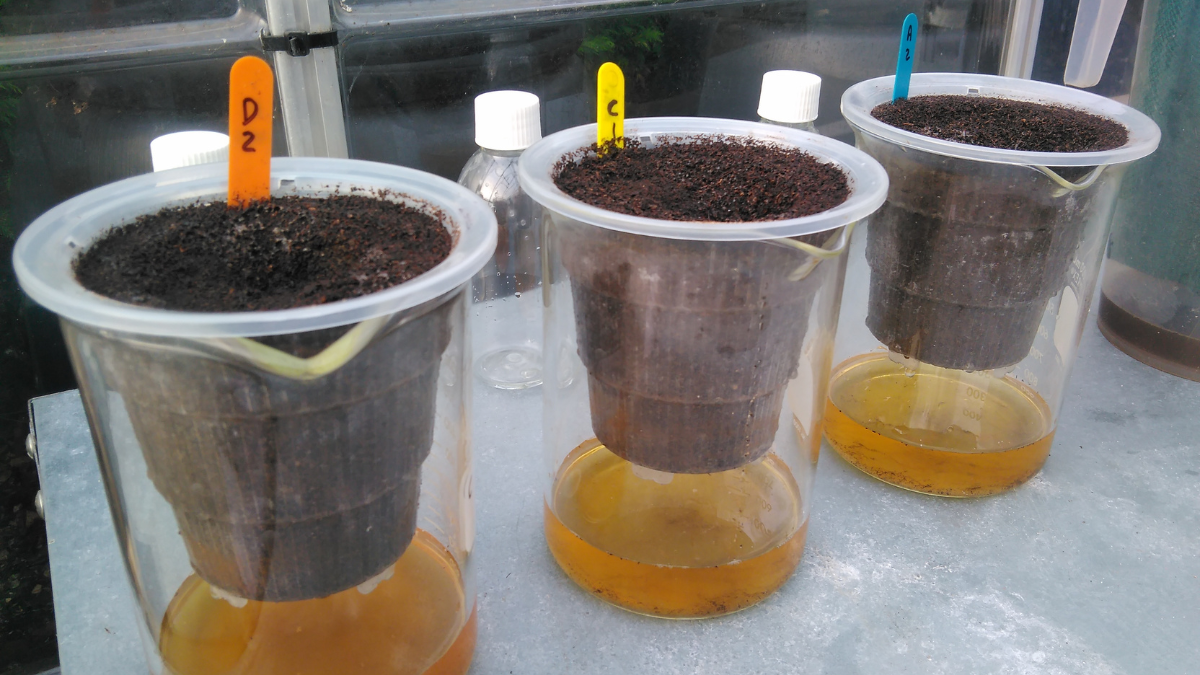
Leachate was filtered before analysis.
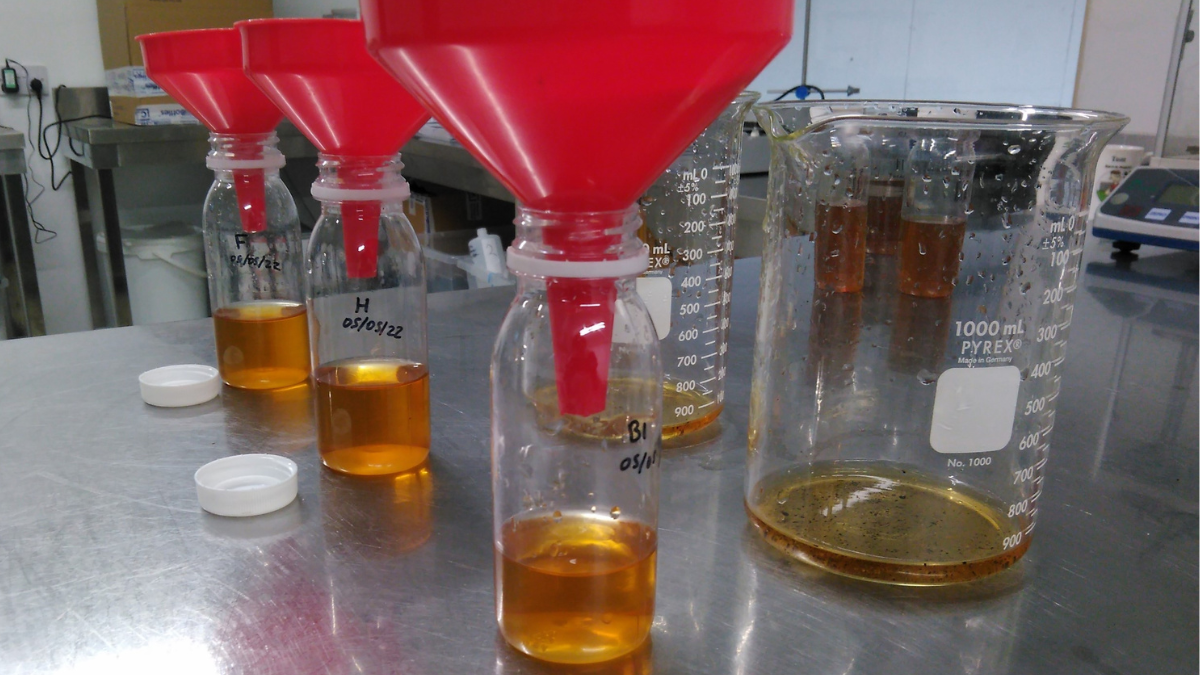
Testing of salinity
To achieve this, we used an electrical conductivity (EC) meter. The EC meter sends an electric current through the liquid and measures how much the material resists the flow of current. The more salts found in the water or soil, the higher the conductivity rating. Sometimes leachate samples need to be diluted before measurement if the salt content exceeds the measurement range of the EC meter.
There was an obvious colour difference between leachate collected from TourTurf® TSF Turf Salt Flush treated soils and leachate collected from untreated soils.
Independent Laboratory Analysis
Measuring EC had given us a strong indication that treating the soils with TourTurf® TSF Turf Salt Flush had influenced the salt content of the leachate. More salts appeared to be getting flushed through the rootzone. To try and gain some further data on treatment effects, we prepared a 1L leachate sample from each treatment to send to an external laboratory.
Levels of the following would be analysed for each leachate sample:
-
Salinity
-
Calcium
-
Chloride
-
Bicarbonates
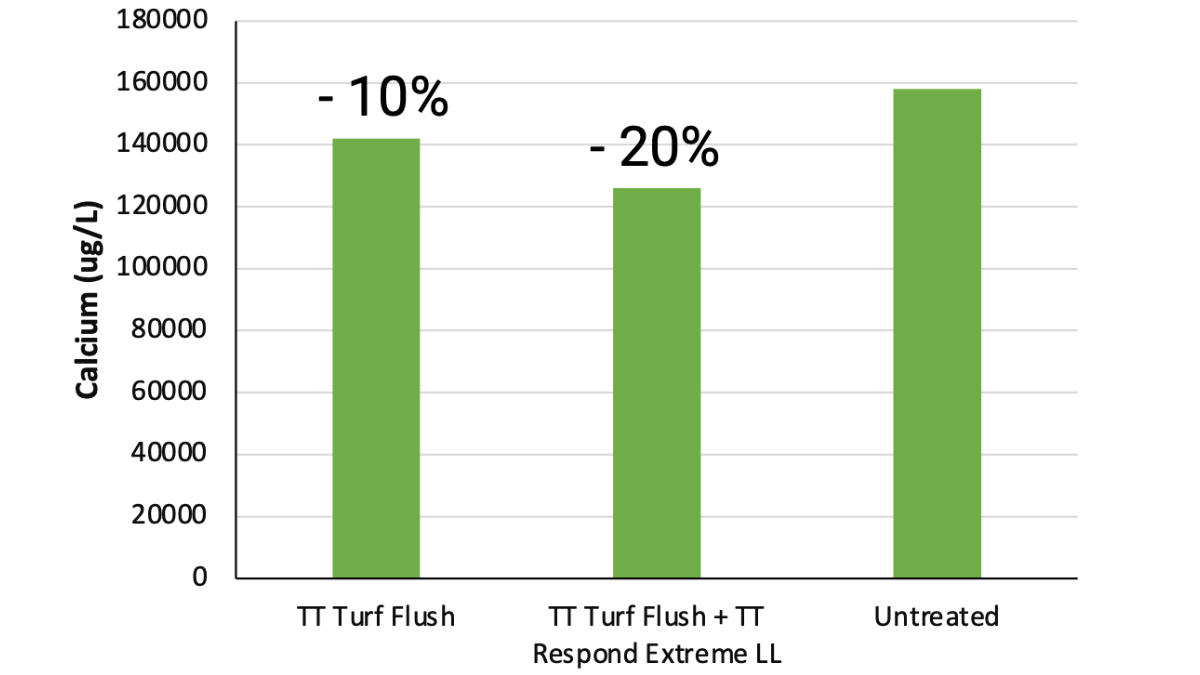
Calcium Flushing
The results prove that the calcium in TourTurf® TSF Turf Salt Flush is not being flushed out of the rootzone by irrigation.
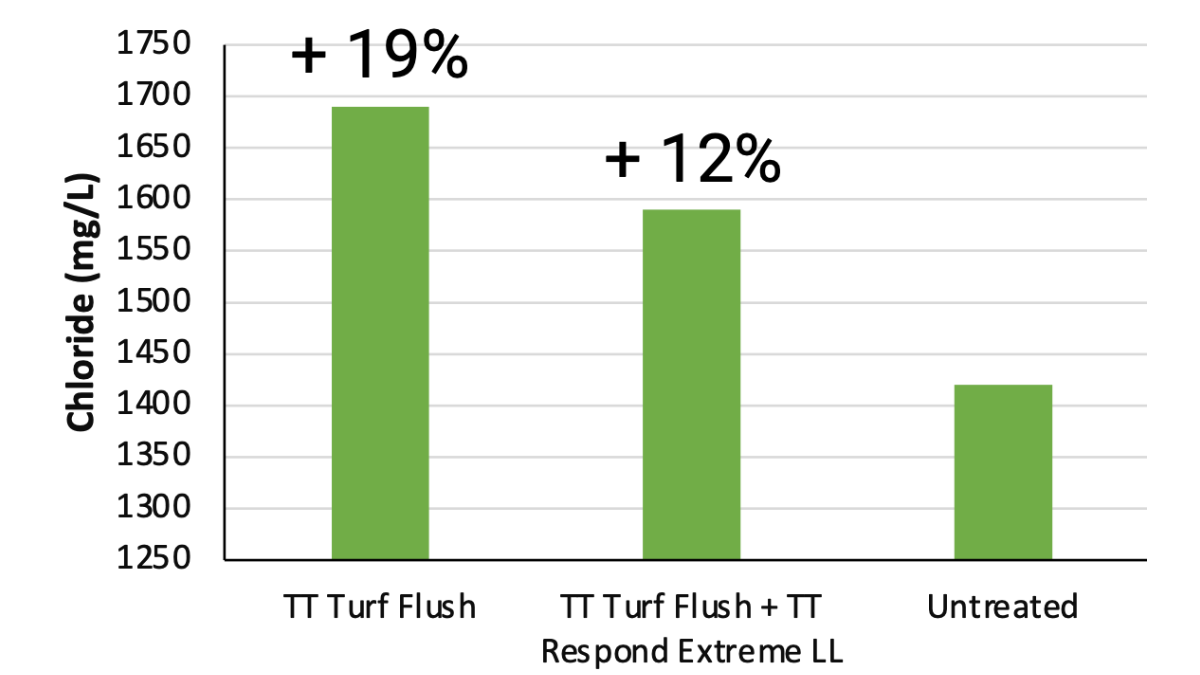
Chloride
Positive effect of treatment on flushing of chloride.
Bicarbonates
Positive effect of treatment on flushing of bicarbonates out of the rootzone! The combined treatment with TourTurf® ELL Respond® Extreme Long Lasting seems to enhance the effect on bicarbonates

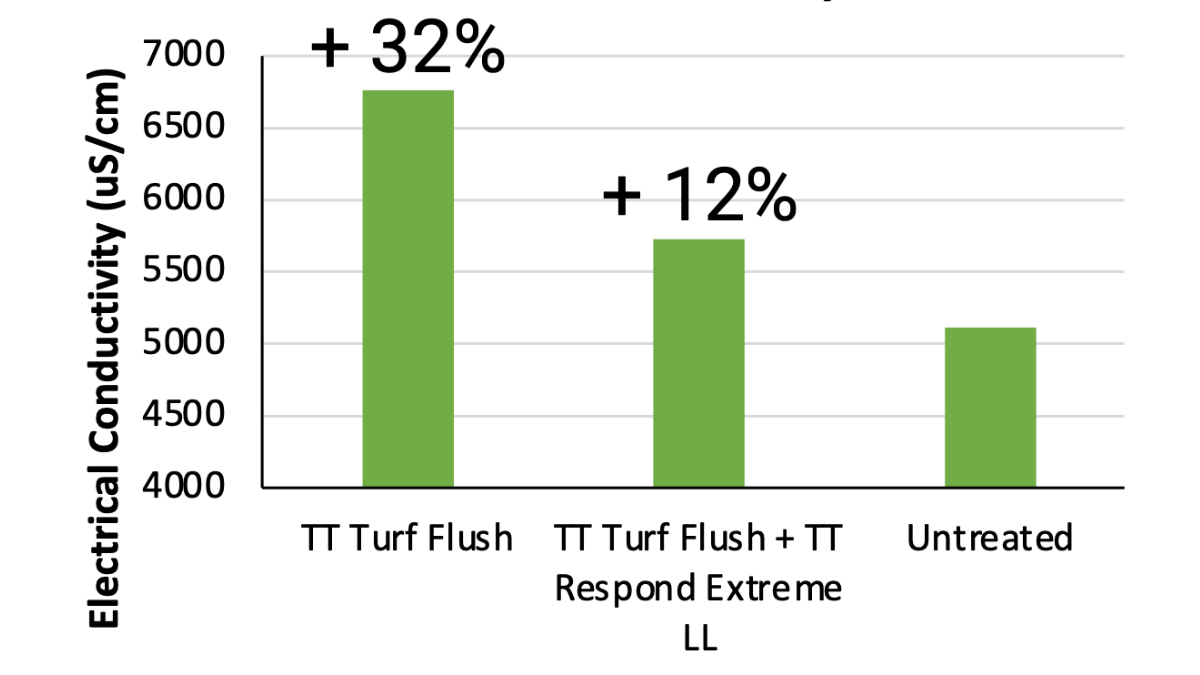
EC and Salinity
The results support our own laboratory findings.
Conclusions
TourTurf® TSF Turf Salt Flush is a valuable tool in combatting salt stress, particularly in places with tight restrictions on the use of irrigation water and an increased use of recycled wastewater.