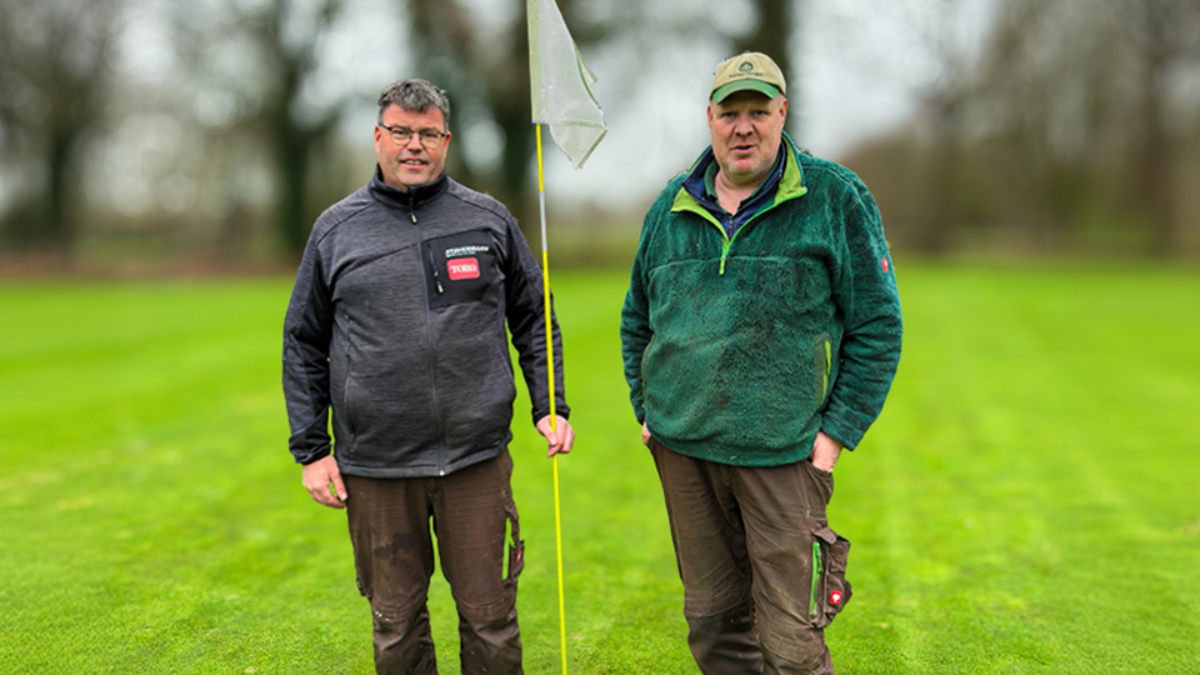
Oldenburgischer Golf Club has 1070 members and there are no tee times. The men's team plays in the regional league and there is a lot of tournament pressure. The course was built in 1964 and has a beautiful old tree population, which also provides for five heavily shaded greens. There is a good working atmosphere with unusually good staff retention. Three of the five maintenance staff are qualified greenkeepers and have been on the course for over 25 years. Torsten was recently awarded for his 25th anniversary, while Uwe has been working at Oldenburgischer Golf Club for 28 years. The club is committed to sustainability and aims to maintain the course as environmentally friendly as possible, which is why it regularly takes part in certification programmes. This is the third time that the course has been awarded the Golf & Nature Gold certificate.
Five full-time greenkeepers and a part-time employee responsible for the e-cards and caddy hall take care of the maintenance.
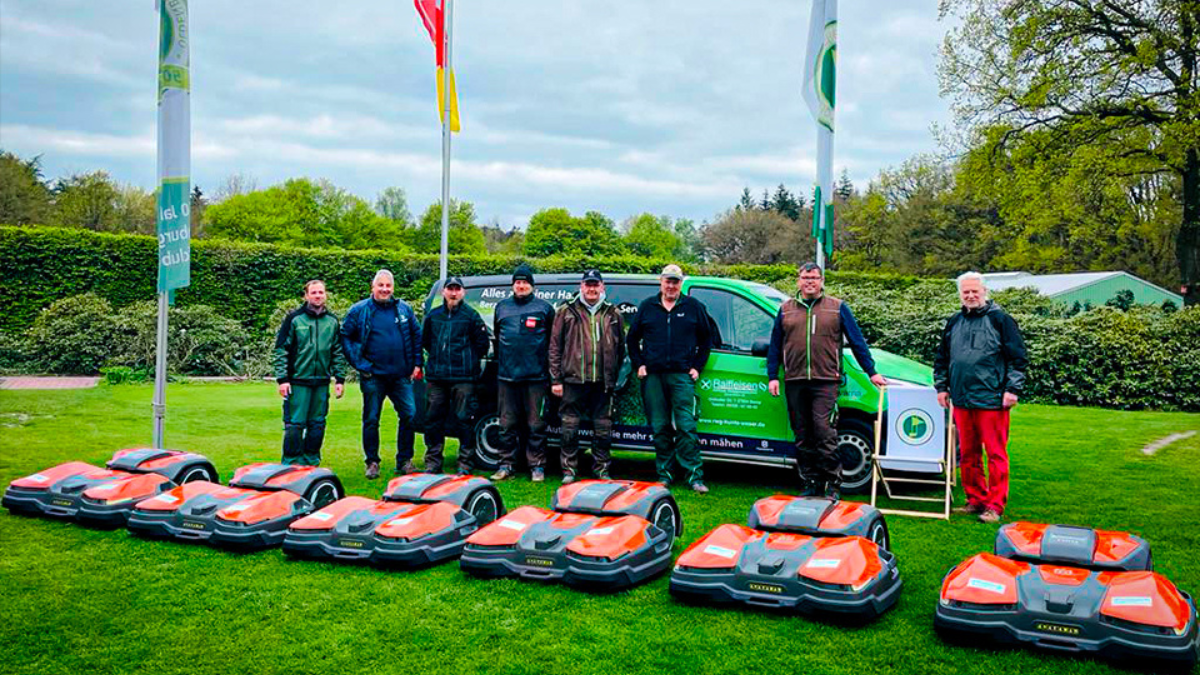
From 2022, the fairways, approaches and some semi-rough areas are mowed autonomously by Husqvarna robots. For better cutting results and hedgehog protection, the robots only run during the day between 8am and 10pm. Autonomous mowing frees up labour for other areas, as only two working hours per week need to be scheduled for robot maintenance.
Following a major fire in 2023, the clubhouse is currently being rebuilt. The greenkeepers have a well-equipped machine park at their disposal. Only the greens, tees, approaches and three selected fairways are watered with Perrot oscillating centre pivot sprinklers. The course is located on clay soil and therefore remains green and visually appealing for a long time, even in dry conditions. Only two fairways are on sandy soil. In winter, two flags are positioned and golfers are responsible themselves to decide whether to play the summer or winter greens depending on the conditions.
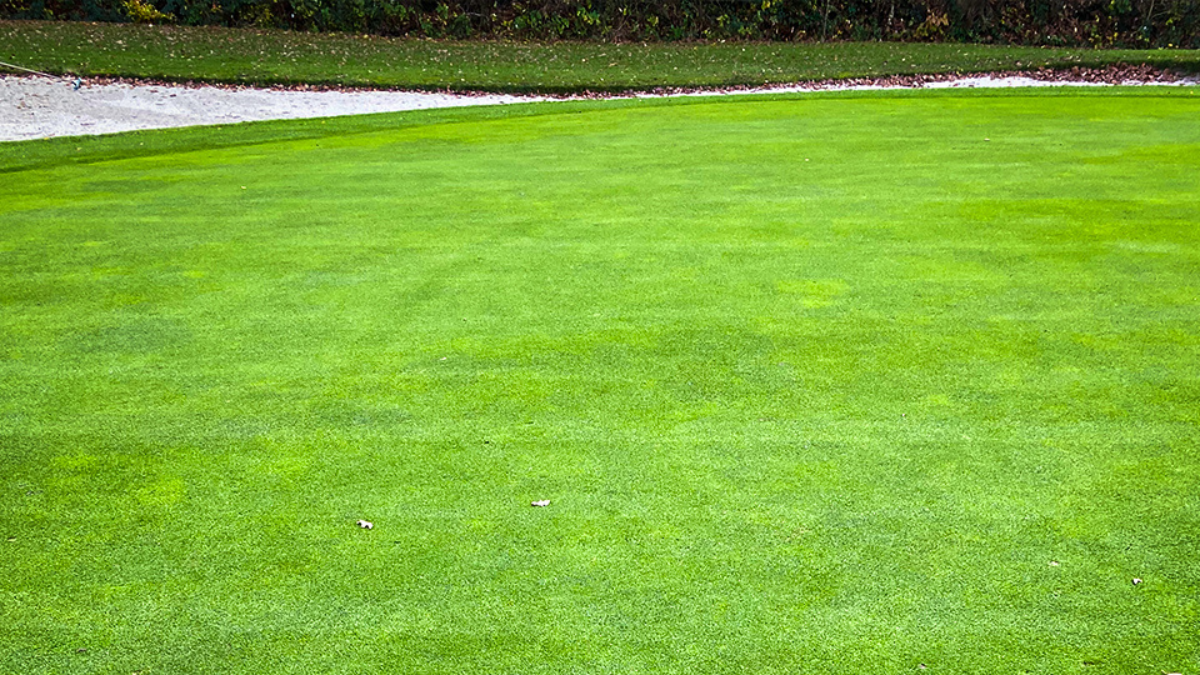
The greens were completely rebuilt in 2002 according to FFL specifications with a drainage layer. This has had a very positive effect on the quality of the course, previously the greens were often far too wet and the playing surface was not up to scratch.
The newly built greens were seeded with Penn A4. Unfortunately, the maintenance was not adapted accordingly and so in the first few years after the remodelling there was a clear layer of thatch and after some time the greens consisted of 70% Poa annua. The tees in the forest under the large beech trees could only be mowed by hand due to the shade conditions.
2024
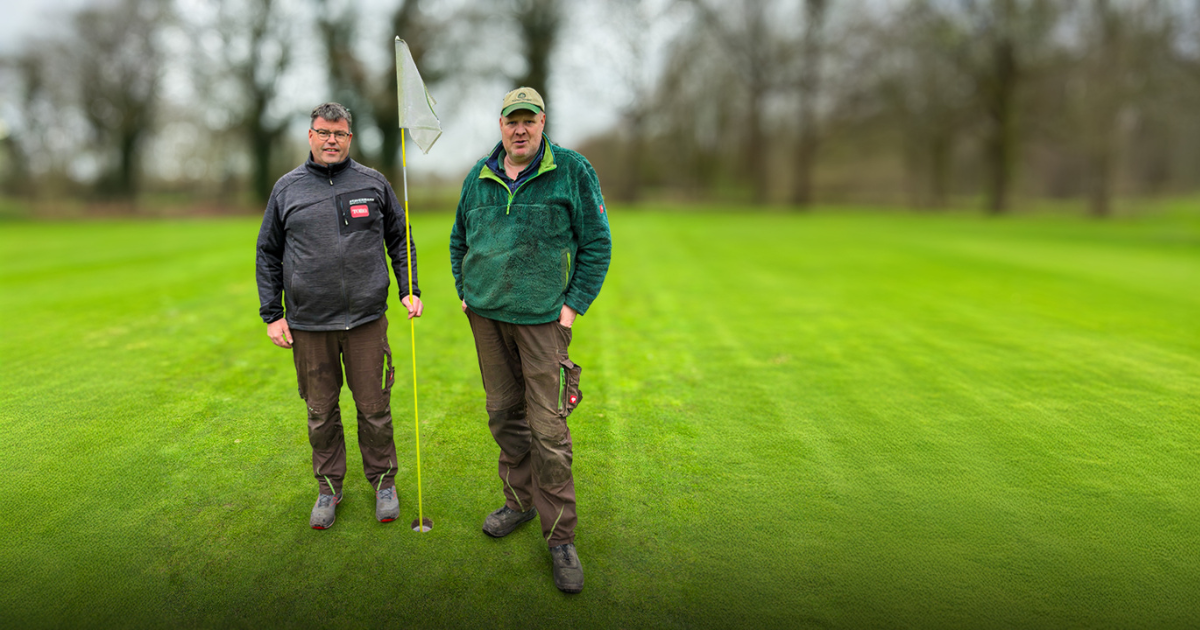
Since Uwe and Torsten took over the Greenkeeping in 2008—Uwe is responsible for managing the work on the course, while Torsten focuses on the office work—they have made significant changes to the maintenance to improve the quality of the playing surface and increase golfer satisfaction.
Torsten regularly travels to other courses to gain experience and get new ideas. In 2015, he was a volunteer at the Solheim Cup in St. Leon-Rot and every summer he helps to prepare the training camp for Werder Bremen in Zillertal together with Lennard Evers from Lilienthal Golf Club.
December 2024
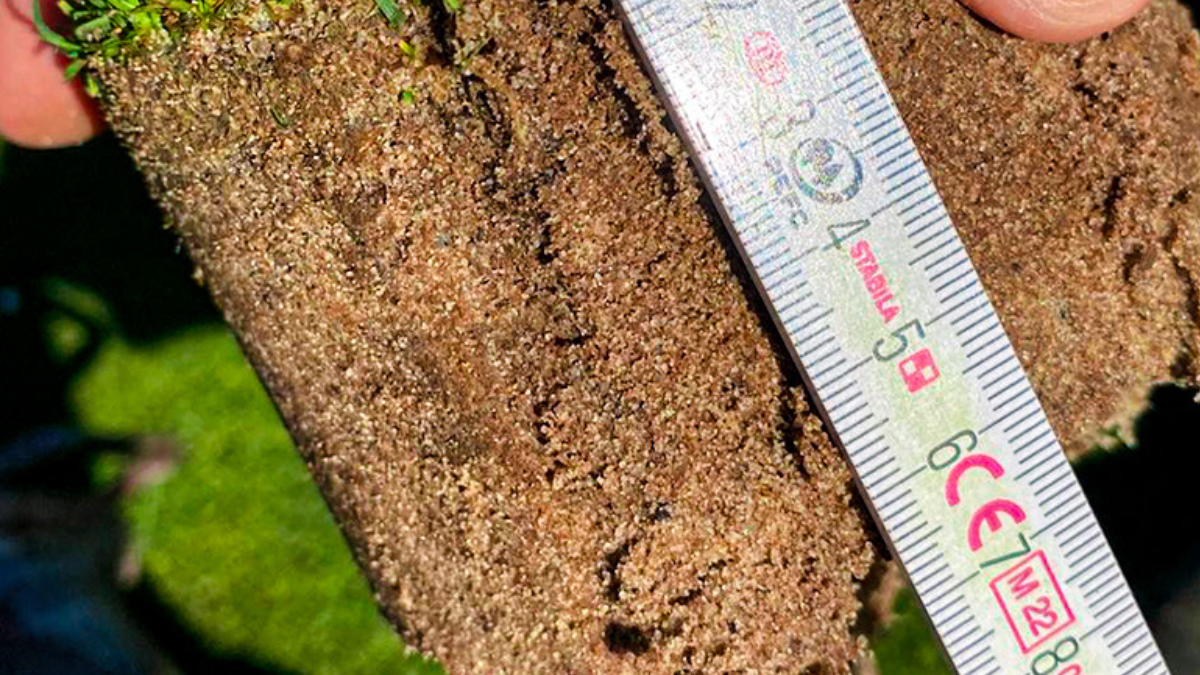
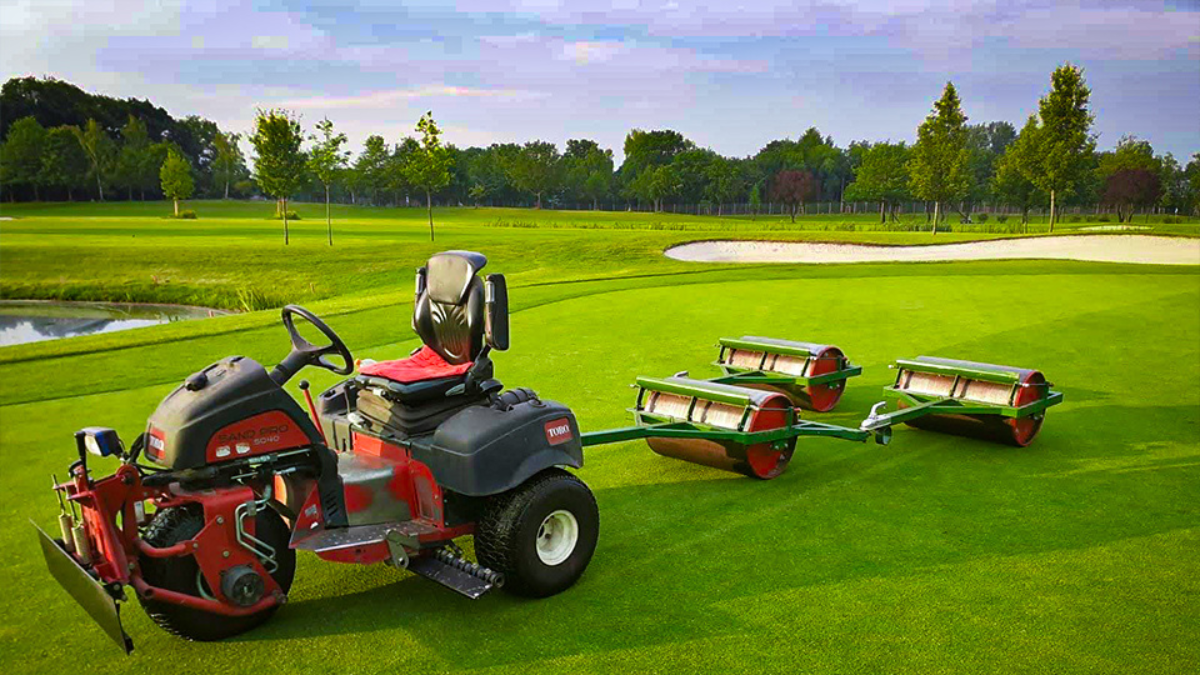
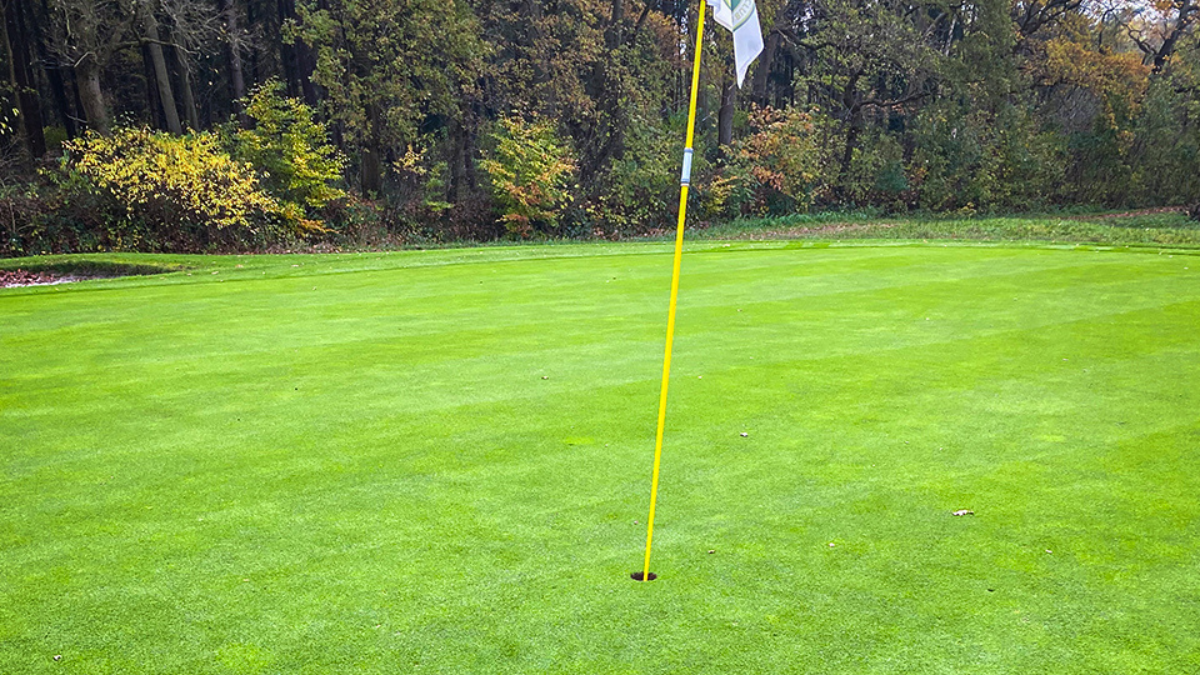
Since 2008, the greens have been re-seeded three times a year with a normal Agrostis mixture using a Vredo. The turf root zone has been continuously improved through regular mechanical measures and the thatch problem has been significantly reduced. Three times a year, large hollow coring spoons are used to replace soil and every two to three weeks, small mini-tines are used for light aeration. Sand topdressing is applied every 14 days and a drag roller behind a bunker rake ensures a true ball roll.
In 2020, the first trials were carried out to supplement the conventional fertilisation consisting of mineral fertilisers, liquid fertilisers and organic soil improvers with TourTurf® FDC and TourTurf® STA.
Since the successful test phase, TourTurf® fertilisers have been used exclusively since 2022. TourTurf® FTE Wetting Agent helps to further increase the amount of Agrostis and the reseeding success. Organic granules ensure a basic supply of the main nutrients and stimulate soil life. Liquid fertilisers, biostimulants and a programme for thatch decomposition with lignin- and cellulose-degrading enzymes as well as natural soil bacteria and fungi complete the programme. Last season, small quantities of nutrients and turf care products for healthy plants were applied in 37 individual applications.


 December 2024