


Microbial additions to products are frequently described as just stress relievers, which does not adequately describe all their capabilities. There is so much more that microbes can achieve.
Some of the TourTurf® products supplying microbes to turf:
- TourTurf® Thatch-Less® ETD Enzyme Thatch Degrader
- TourTurf® Thatch-Less® FTD Fungi Thatch Degrader
- TourTurf® BTS Biological Turf Stimulator
- TourTurf® Organic Growth
- TourTurf® Renovate
- TourTurf® Organic Balanced
- TourTurf® MPT Mycorrhizae Plant & Turf Activator
- TourTurf® MTB Mycorrhizae, Trichoderma and Bacteria Pack
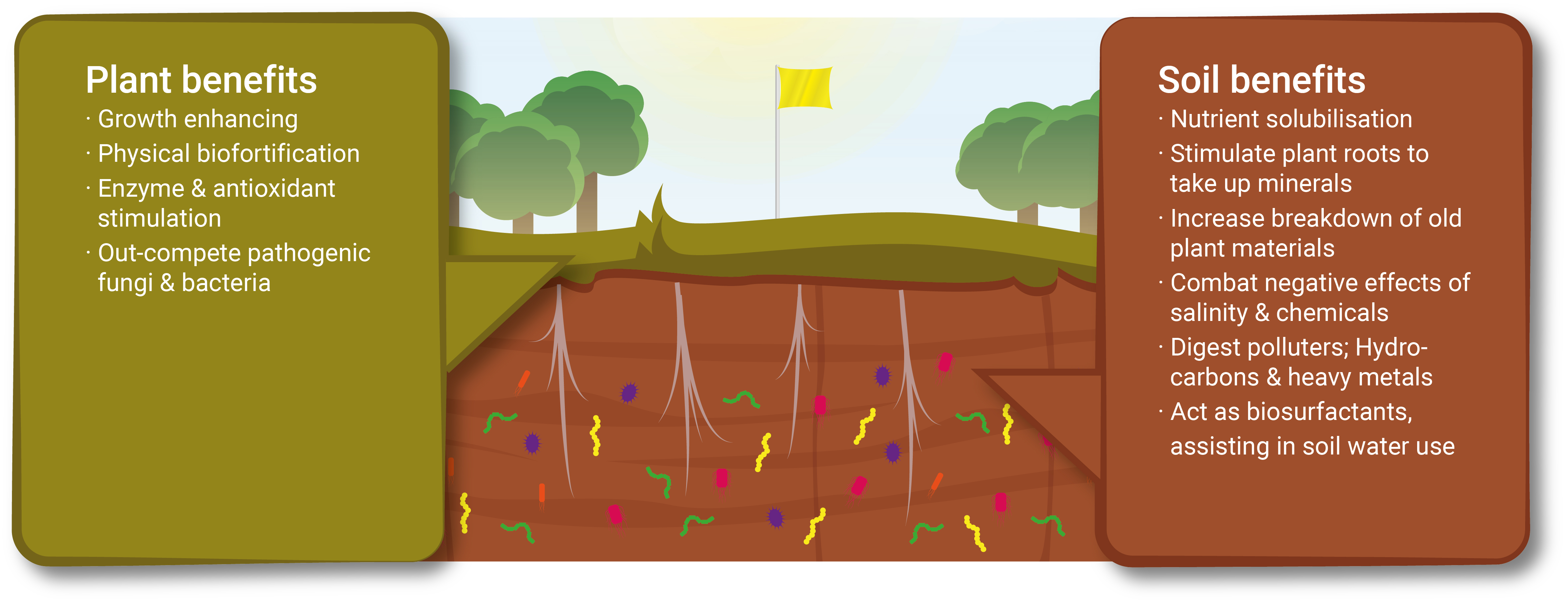
The benefits of applying microbial species to turfgrass are numerous and interdependent. Below is a simplified outline of the advantages for both plants and soil.

Plant benefits
1. Growth enhancing capabilities
Many microbial species increase plant growth and productivity. In turfgrass the objective is steady, resilient growth rather than crop yield. Beneficial microbes help reduce abiotic stress such as heat, drought, cold, waterlogging and abrasion.
Consistent microbial populations support turf resilience and make growth more reliable.
Example microbes:
Bacillus subtilis, Bacillus megaterium, Pseudomonas fluorescens, Aspergillus niger
2. Physical bio-fortification of plants
Biostimulants containing specific microbes strengthen plant immunity processes that are often weakened by turf stress.
Low organic matter growing media typically lack natural microbial populations, so these benefits must be reintroduced. Endophytic bacteria such as Pseudomonas fluorescens can work within plant tissues to improve resilience.
Example microbes:
Bacillus subtilis, Pseudomonas fluorescens
3. Enzyme & antioxidant stimulation
Abiotic stress triggers production of reactive oxygen species (ROS), which can damage plant cells. Plants counter this through antioxidant compounds including vitamins, phytochemicals and enzymes.
Certain microbial species stimulate faster antioxidant production including vitamin C and enzyme systems such as superoxide dismutase and peroxidase.
Example microbes:
Bacillus amyloliquifaciens, Bacillus subtilis
4. Competition with pathogenic microbes
Beneficial microbes colonise the turf rootzone and compete with harmful fungi and bacteria for space and resources. This natural competition reduces pathogen activity without using biocidal approaches.
Example microbes:
Trichoderma viridae, Trichoderma harzianum, Bacillus polymyxa, Bacillus megaterium, Bacillus pumilus, Bacillus licheniformis
Soil benefits
1. Nutrient solubilisation
Soil microbes help convert fertilisers into plant-available forms. Bacillus species play an important role in breaking nutrients into soluble forms that turfgrass can absorb.
Example microbes:
Pseudomonas fluorescens, Pseudomonas putida, Bacillus polymyxa, Bacillus megaterium, Bacillus pumilus
2. Root stimulation & mineral uptake
Bacillus species stimulate root exudates which attract beneficial microbes. These organisms act as siderophores, helping plants absorb nutrients.
Mycorrhizal fungi also form symbiotic relationships with plants, increasing root growth and improving soil structure, drainage and moisture retention.
Example microbes:
Bacillus licheniformis, Bacillus subtilis, Bacillus amyloliquifaciens, Glomus spp, Paraglomus brasilianum, Gigaspora margarita
3. Breakdown of organic matter
Microbial activity accelerates decomposition of plant residues, preventing thatch accumulation and recycling nutrients back into the soil.
Example microbes:
Trichoderma viridae, Pseudomonas putida, Bacillus amyloliquifaciens
See this article about controlling organic matter and thatch.
4. Reducing salinity stress
Fertiliser salts and saline irrigation water can reduce nutrient uptake in turfgrass. Beneficial microbial populations help mitigate sodium effects and improve soil balance.
See this article on reducing sodium in soil.
Example microbes:
Arthrobacter globiformis, Pseudomonas fluorescens, Pseudomonas putida
5. Breakdown of pollutants
Certain microbial species can degrade hydrocarbons and help immobilise heavy metals from pollutants introduced by machinery or industrial sources.
Example microbes:
Trichoderma harzianum, Arthrobacter globiformis, Bacillus subtilis subsp. subtilis
6. Bio-surfactant activity & water efficiency
Microbial metabolites act as natural surfactants in soil, improving water movement and retention. Together with glomalin produced by plant roots, this improves soil structure and nutrient efficiency.
Example microbes:
Pseudomonas fluorescens, Bacillus subtilis subsp. subtilis, Bacillus licheniformis