

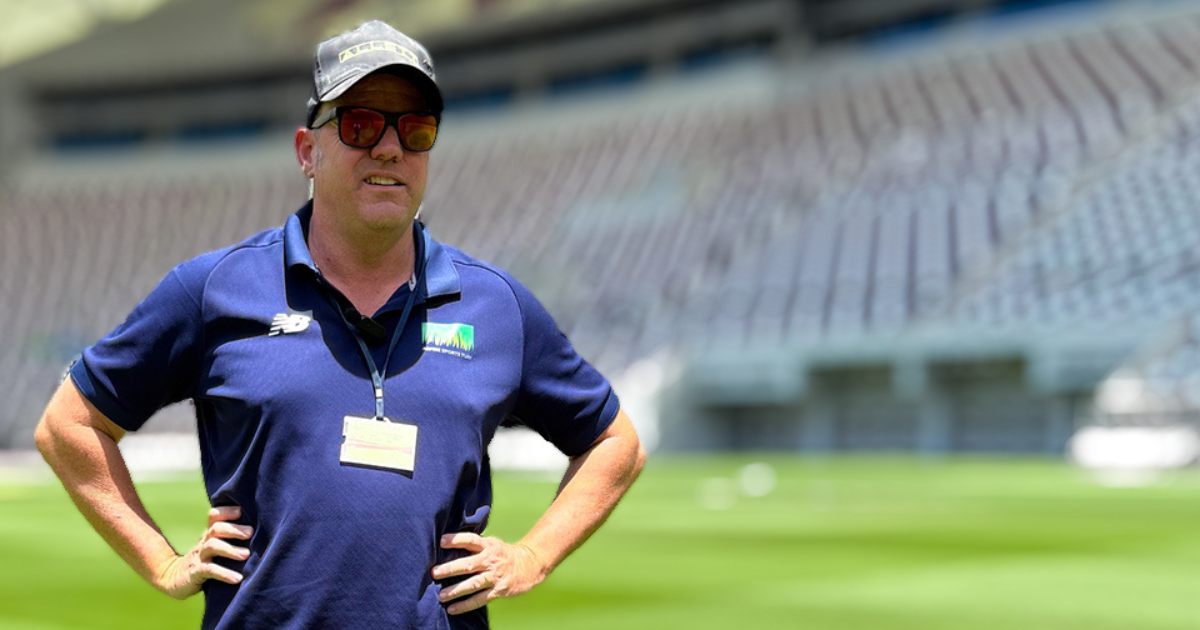
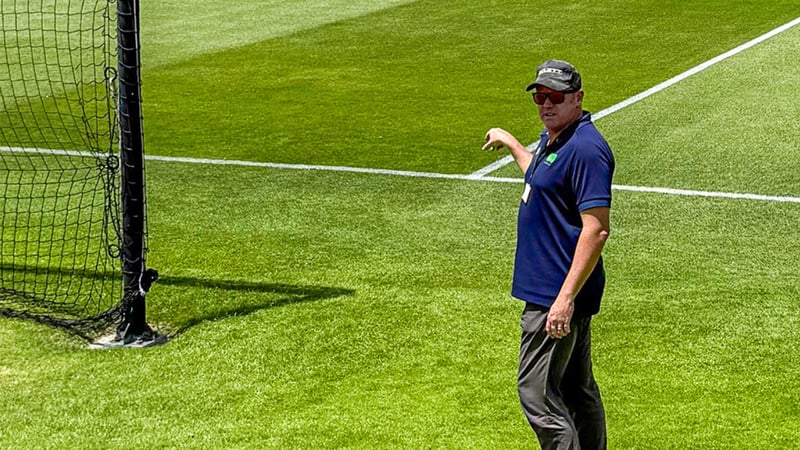
Meet him in this video from one of our visits.
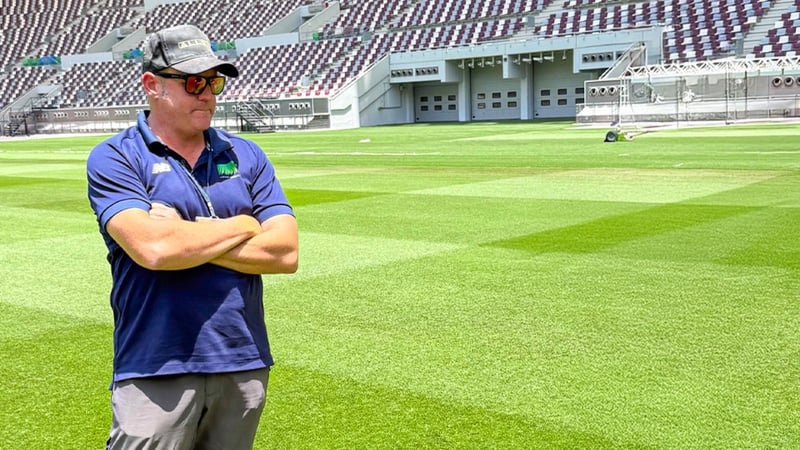
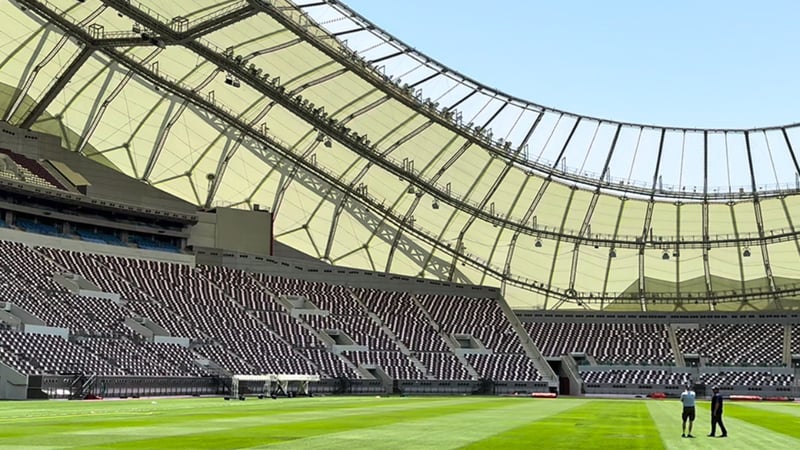
Adrian was born in Australia and studied to be a groundsman in Sydney. He started working at a very busy cricket stadium in Sydney, with football just next door. When he was employed in Qatar 10 years before the 2022 FIFA World Cup, the sport just got started. But now, since this successful tournament, frequent high-ranking international sport events, training camps for different high-class teams make Aspire Zone and Khalifa stadium busier than ever before, and it's a challenge to keep the pitches in perfect condition year round.
To provide the best possible quality, there is a transition of grass species twice a year. In the stadium, the warm season grass Paspalum is used, a few of the training pitches are planted with Bermuda grass. In the cooler season, fast-growing Rye grass (Lolium perenne) is overseeded to provide cover. Paspalum will begin to grow when the soil temperature rises again. The cutting height is lowered, nutrient input is reduced and Paspalum emerges again. In November, the pitch is changed to rye grass once more.
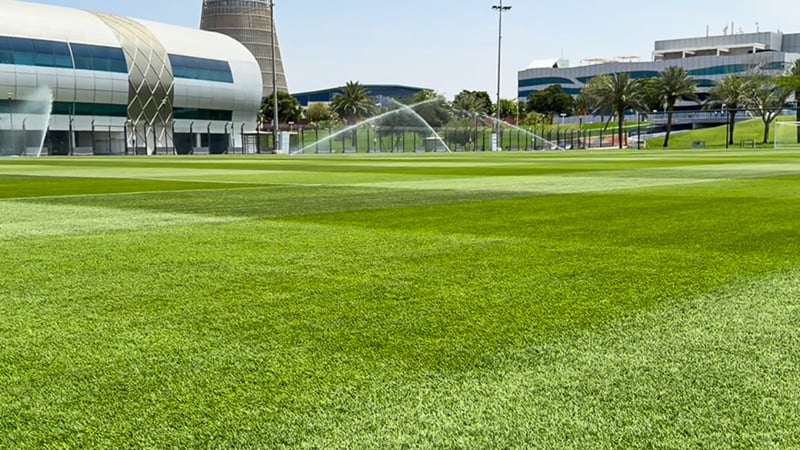
Adding the Rye grass is relatively easy. But transitioning into the warm season can be a challenge. The cutting height is lower. Will all the warm season grass come up evenly, especially in the shaded areas?
The transition phase is getting harder and harder. More matches are played, and in the short summer break all the 140 pitches and racetracks have to be cored, renovated and gaps have to be closed, a logistical masterpiece.
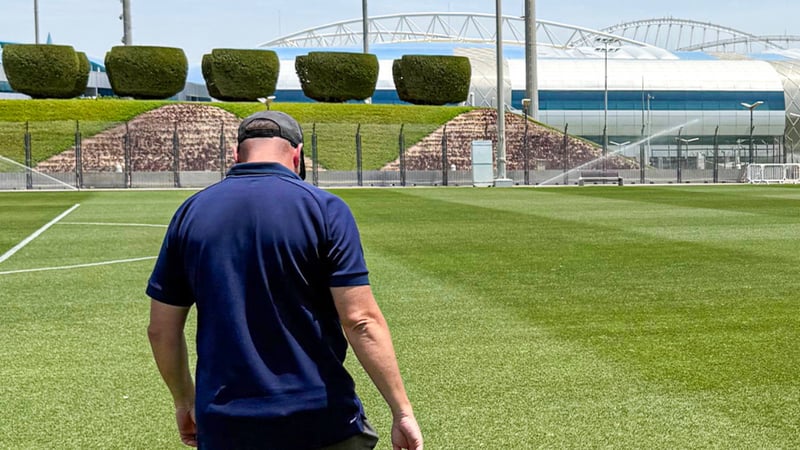
TourTurf® Tools
Adrian uses tools from the TourTurf® range to improve the transition phase and make the turf and soil healthier. When overseeding with Rye grass, he uses TourTurf® Organic Warm Season, followed by two applications of TourTurf® Organic Balanced. Adrian says: “I only get 2–3 weeks to get the Rye up!” Rye grass is overseeded twice using a machine equipped with disks, making slits. After that, seeding is repeated, making dimples. 60g/m2 seed is used initially per month, later 20g. This program works for them: “Within 5 weeks I play the full games, the density is there. And the warm season turf underneath gives the pitch the needed stability!”
Transitioning back to warm season grass, TourTurf® Renovate is used in small amounts during March and May to wake up Paspalum from dormancy without overloading it with nitrogen.
TourTurf® SUS StandUp Silicon is used to make the grass stand up, make the rye grass more vertical and get less wear and tear. TourTurf® TSC Turf Surface Conditioner is used regularly with 40l/ha to produce stunning colour. TourTurf® BTS Biological Turf Stimulator helps to stimulate a healthy bacterial microflora in the soil.
Since desalinated water, high in pH and in bicarbonates, is used for irrigation, regular 20 minute long flushing in combination with TourTurf® TSF Turf Salt Flush and wetting agents helps to keep the rootzone in a range suitable for turf growth.
Major disease challenges include large patch and brown patch, which attack the rhizomes of Paspalum. Pythium has been an issue in the past, but is less of a challenge now. Fungicides are being used, but there is concern that they can only suppress rather than fully cure these diseases, possibly leading to a partial pitch rebuild.
In the future, Adrian plans to field test some of the liquid organic products to increase turf health and improve soil microbial activity.
The quality of the pitches is great despite the unique challenges, and it's so inspiring to see how much work and dedication goes into maintaining them!