

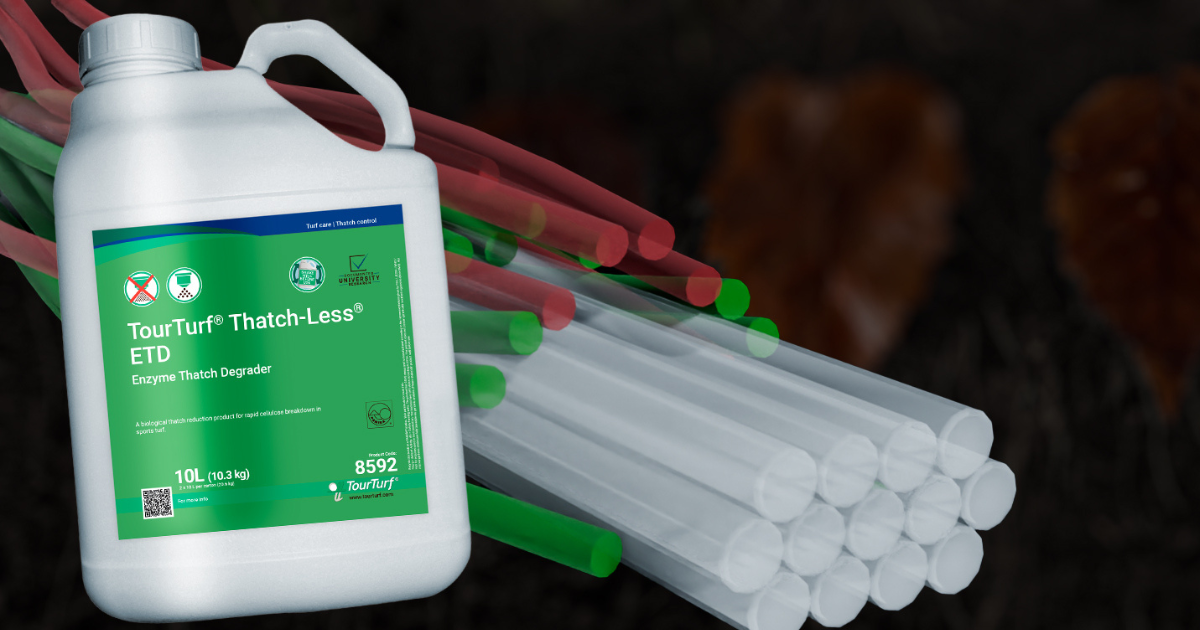
TourTurf® Thatch-Less® ETD Enzyme Thatch Degrader is now formulated with laccase enzymes for optimised performance and the quick degradation of lignin, the hardest to decompose part of thatch on golf greens and other low-cut playing surfaces. It attacks first the Lignin, opening the structure to allow better cellulose breakdown. Additionally, the product contains a variety of cellulase enzymes for cellulose breakdown and a mixture of selected soil bacteria that can break down cellulose and lignin further.
Composition of thatch
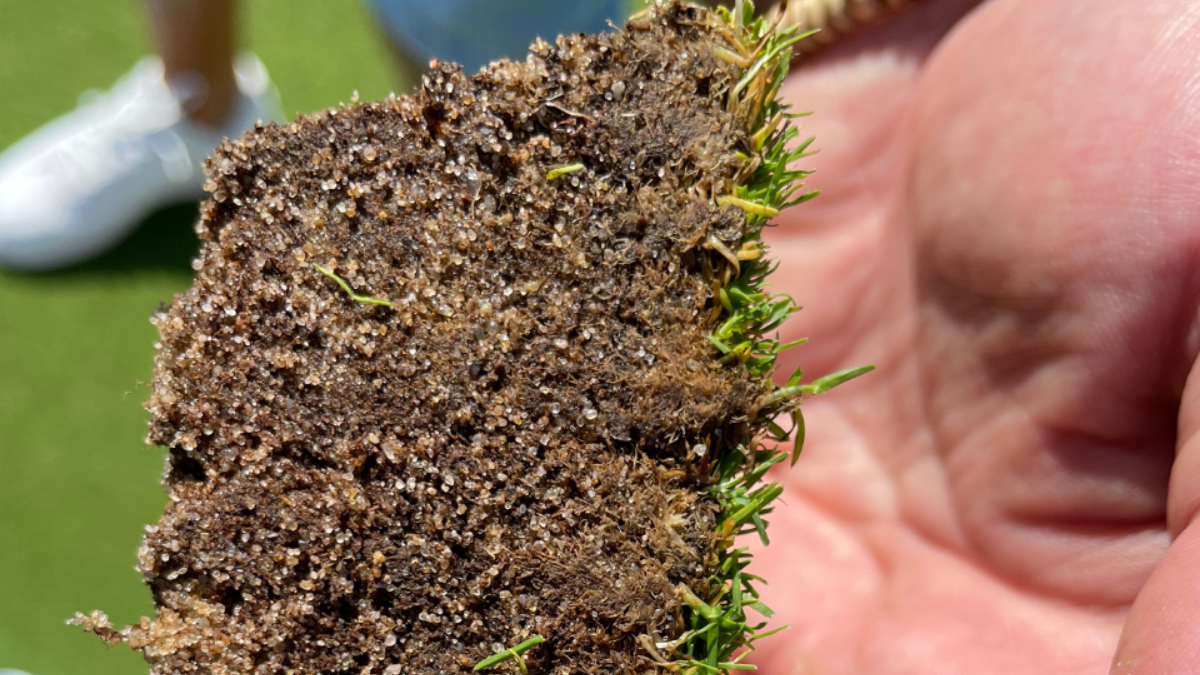
Thatch describes the organic layer of dead and living shoots, stems, and roots that develops in turf on top of the soil surface. Thatch consists of 35 - 38% (dry matter) cellulose and hemicellulose that can decompose relatively easily. 25% of thatch is made up of lignin that decomposes much harder. If more thatch is formed than can be decomposed, thatch is building up.
While a small amount of thatch can be beneficial, excessive thatch can impede water infiltration, nutrient uptake, and root growth. It can also create a soft, unstable surface, negatively impacting playability and making it difficult for turf to recover from stress.
Why lignin is so difficult to break down
Lignin is a highly complex and rigid polymer found in plant cell walls, making it difficult to degrade. Its irregular shape and hydrophobic nature protects turf plants from microbial attacks.
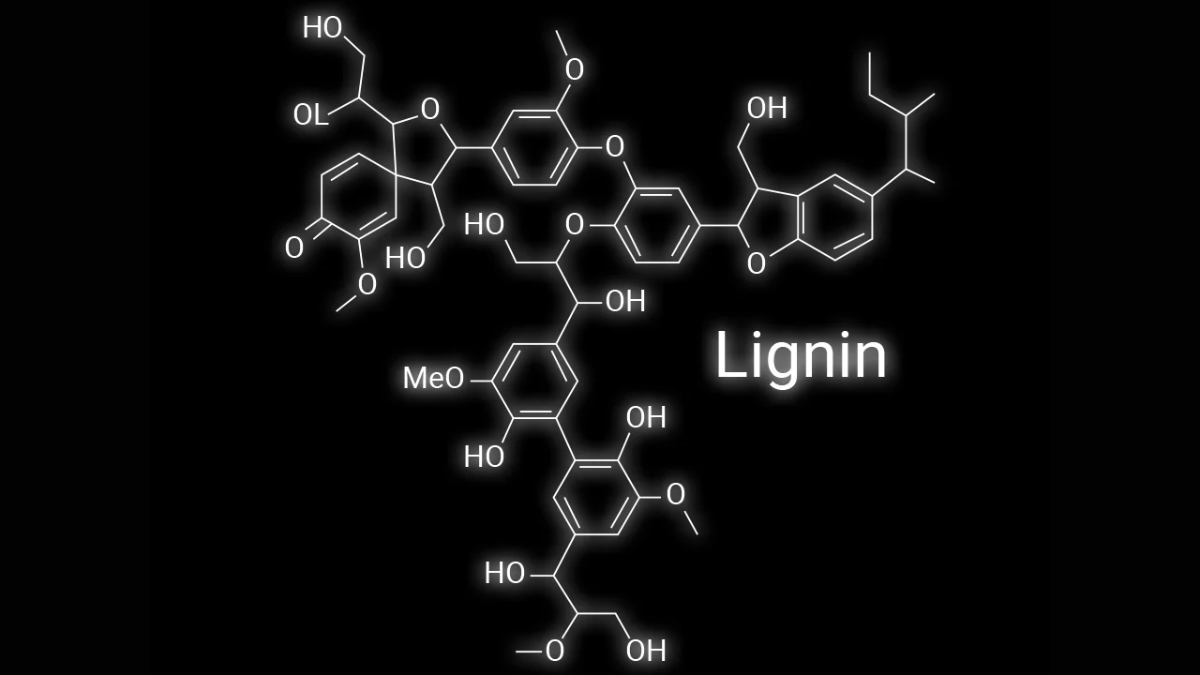
Professor Michelle O’Malley from UC Santa Barbara, a researcher in chemical engineering and biological engineering, explains: “You can think of lignin as kind of a skeletal system for plants,” additionally, she said, lignin has properties that make the plant resistant to physical degradation by enzymes and pathogens. “Lignin is really important — it provides that hardiness and structure, but it’s equally difficult to break down for the exact same reason” (https://news.ucsb.edu/2023/020865/deconstructing-lignin).
Turf contains high amounts of lignin. The presence of lignin protecting the cell walls makes decomposition very difficult.
How does laccase work
Polyphenol oxidases (lignases) are very common in nature have been very well studied in living plants, mainly in connection with browning of fruits. “Laccase” is a generic term describing a variety of lignin degrading enzymes. They are switched on after natural senescence or when a plant is injured in some way. Bacteria and fungi also produce them. Specialized organisms like white-rot fungi are specialized to break down lignin using enzymes such as lignin peroxidase and manganese peroxidase. Other fungi, like brown-rot fungi, and certain bacteria also contribute. These organisms play a vital role in the natural recycling of plant material.
Grass clippings degrade naturally in the same way, TourTurf® Thatch-Less® ETD Enzyme Thatch Degrader just accelerates a natural process in turf growing on artificial playing surfaces.
Metal peroxides (that include lignases) can open up other heterocyclic rings, not only in lignin. This allows them to be effective even against oily hydrocarbons from oil spills, as well as synthetic molecules such as some pesticide residues.
The updated formulation of Thatch-Less® ETD ads ready-made enzymes to the soil profile that start the degradation of organic matter in the thatch immediately. The high content of laccase breaks the strong chemical connections of lignin in old roots, stems and cell walls. This makes the cellulose more vulnerable to the cellulase enzymes that will break down cellulose and hemicellulose.
Birch leaf degradation
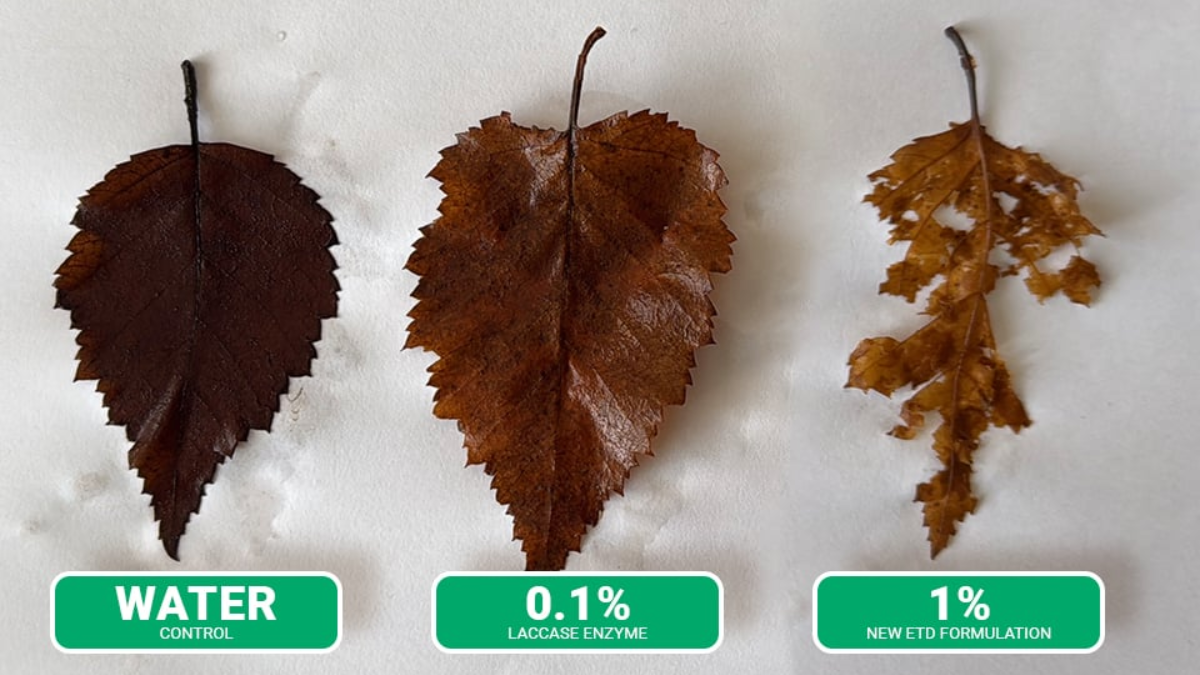
In this in-house experiment, you can observe the effect on a birch leaf, its shape, making it an ideal model plant for this experiment. They are relatively high in lignin compared to other deciduous leaves. Dead, dry birch leaves can contain up to 20-25% of lignin. Thatch in turf, with about 25%, depending on the grass species and composition of stems and roots, contains even more lignin. The lignin content of freshly mown grass is quite low, with 15-18%.
Pure laccase enzymes (picture in the middle) can soften the leaves and start to break down the structure. But as you can see on the right side, Thatch-Less® ETD is superior. The laccase starts the process, the broad range of cellulases can break down the cellulose and bacteria (on natural turf assisted by the natural microflora), fuelled by carbohydrates and seaweed extract, can continue the decomposition. The four beneficial Bacillus strains that make up the ‘core consortia’ of microorganisms in the product are B. subtilis, B. licheniformis, B. amyloliquefaciens and B. pumilus. The combination of readily active enzymes and steadily performing microorganisms in this bioproduct makes it possible to degrade and convert the hard to breakdown thatch into plant nutrients, sugars and soil humus more effectively. The trial was done without oxygen under anaerobe conditions.
The decompositions will work even better with enough available oxygen. To reduce thatch in turf, optimise your aerification program and combine Thatch-Less® ETD (Active laccase and cellulase enzymes + bacteria) and Thatch-Less® FTD (laccase and cellulase producing fungi + bacteria) applications with TourTurf® OXT Oxygen Turf for readily available chemically bound oxygen, increasing the activity of beneficial soil microbes.